
Why The Laundry Room is My Favorite Room in the House
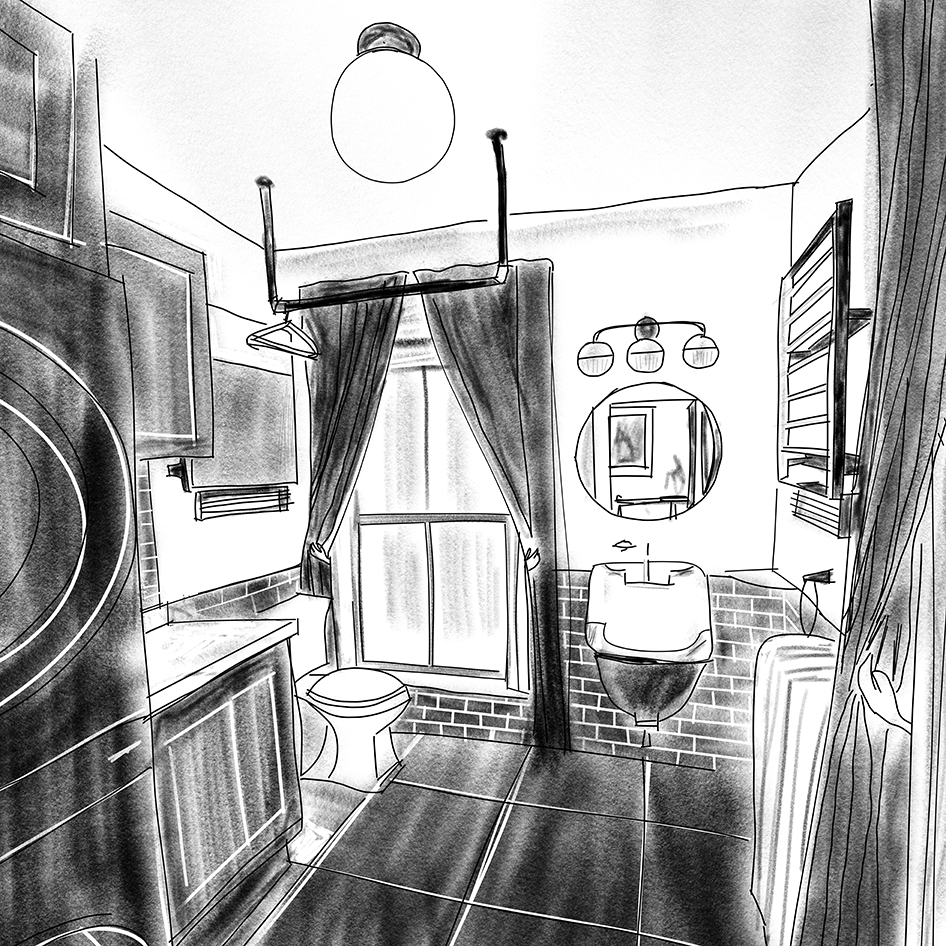
We’ve done a series of renovations at Yellow Wood, our mansard Victorian in the Hudson Valley.
There are rooms in the house that are more obviously impressive. The master bathroom is extraordinary. The living rooms on the first floor are layered and hospitality-driven, a mix of personal pieces, high and low design, and objects collected over time.
But my favorite room in the house is the laundry room.
Not because of how it looks, but because of what it does.
When we bought the house in 2013, the washer and dryer were tucked into a powder room on the first floor. They sat behind bi-fold doors in a windowless space between the kitchen and dining room. There was no counter, no place for clean or dirty clothes, and no natural light. Laundry had nowhere to go, so it took over the house.
It landed on the dining table. It blocked access to the bathroom. It moved in piles from floor to floor. It required hauling loads up steep stairs from the third floor bedrooms. Over time, it created a low level but constant friction that affected how the house functioned.
And like most things, that friction turned into behavior. Delay, avoidance, buildup.
When we decided to make the house our full-time home, I knew we needed to renovate the bathrooms. But I also knew the real opportunity was not just the bathrooms. It was the laundry.
On the second floor, there was a room I had been using as an office, but rarely occupied. It sits at a critical junction off the back stair, connected to all three floors but slightly removed from the main rooms. It was not an obvious choice, but it was exactly right.
Bringing plumbing into that room was a real decision. It is always easier to renovate where infrastructure already exists. But I knew this move would have a ripple effect across the entire house.
We split the room in half. One side became a master closet. The other became the laundry room, anchored by two corner windows with light throughout the day.
We installed a stacked LG washer and dryer to save space. We added counters, upper and lower cabinets, and an industrial sink. We built in flexible drying and hanging systems. We also added a toilet, which turned out to be one of the most useful moves in the house, especially given its location between floors.
The palette is consistent with the rest of the house. Black subway tile, black cabinetry, black flooring, and white walls, with Carrera marble counters that tie back to the kitchen and bathrooms. The door has a stained glass panel that brings in color and shifts depending on whether it is open or closed.
It is a utilitarian room, but it is also very intentional.
And it changed everything.
Laundry no longer spills into the social spaces. The first floor stays clear. The third floor is one easy flight away. The master suite is directly connected. What used to be disruptive is now seamless, and even enjoyable.
Every time I come up the back stairs, I see the room from the landing. It reads less like a destination and more like a hinge, a tight joint in the house that allows everything to move more smoothly.
This is what I mean by the design of the invisible.
The problem was never the appliances. It was circulation, behavior, and flow. One misaligned condition was quietly affecting the entire house. Addressing it in the right place had an impact far beyond the room itself.
Most people would have focused on making the original powder room more attractive. That would not have changed anything.
The laundry room is the linchpin, not because it is special, but because it is aligned.
And that is the work, at every scale.