
Your Workplace Has a Personality Disorder
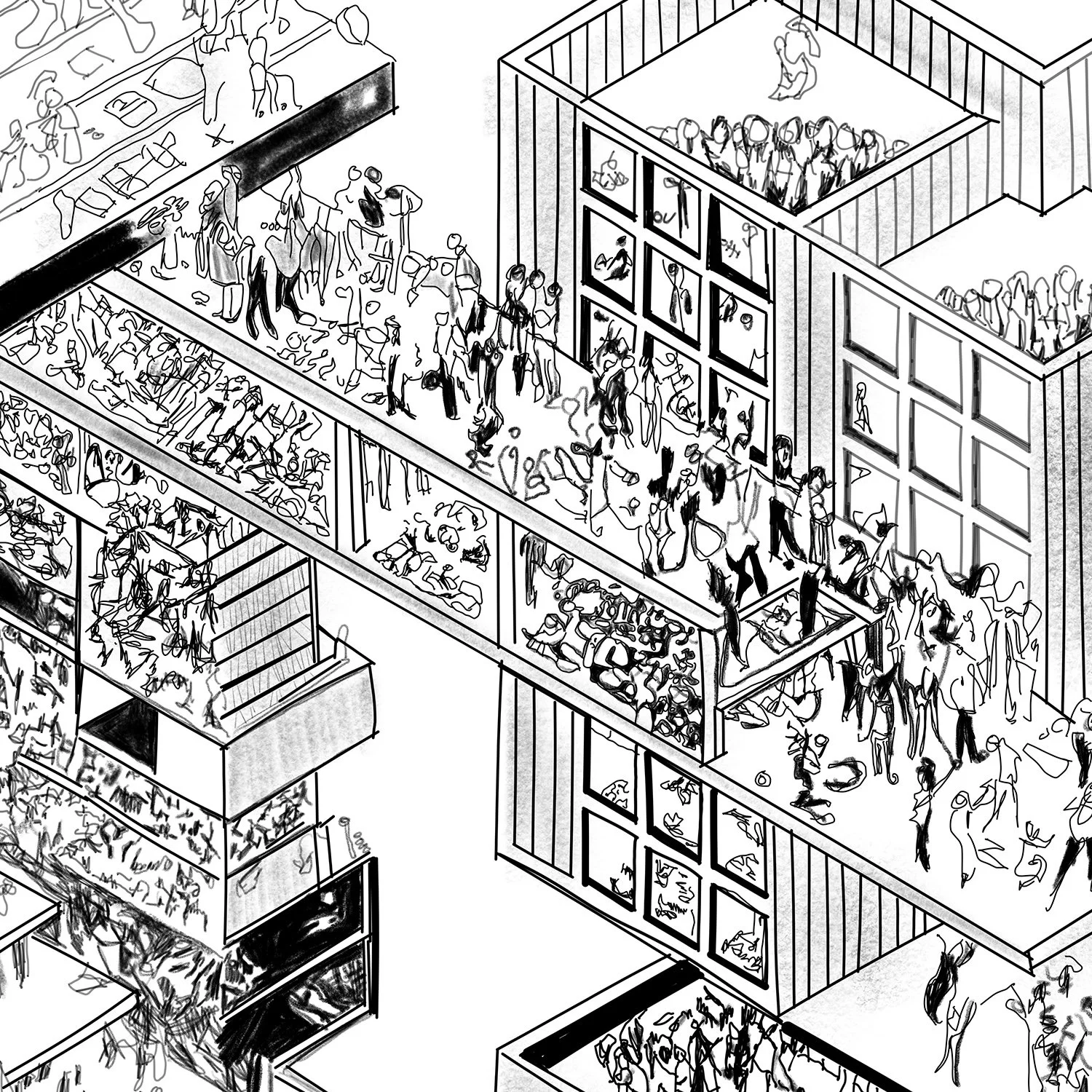
Most companies don’t have a design problem.
They have an alignment problem.
Leadership sets a vision.
Culture evolves in practice.
The workplace sits somewhere in between.
And over time, the gap grows.
Your company says one thing.
People experience another.
That gap is where friction lives.
It’s where trust erodes.
It’s where performance quietly breaks down.
I’ve sat in hundreds of programming meetings across organizations, from leadership to operations to warehouse teams.
Here’s what I’ve learned:
Everyone is dealing with something.
And almost none of it is visible.
Departments don’t trust each other.
People don’t understand how other teams actually work.
Annoyances stack up into narratives.
Narratives become culture.
And culture shows up in space—whether you design for it or not.
Most companies try to solve this in pieces:
Executive coaching,
Team training,
New branding,
A new office.
But they miss the connection between them.
Behavior, operations, and environment are not separate problems.
They are the same problem—expressed in different ways.
That’s the work I do.
I’m trained as an architect, and I’ve spent the past 25+ years zigzagging between architecture, cultural institutions, and large organizations—learning how decisions get made, where friction lives, and how space can either reinforce it or resolve it.
With clients,
I sit outside the system, but close to leadership.
I listen across the organization.
I look for patterns most people can’t see.
Then I translate those patterns into:
behavioral insight
operational shifts
and environments that actually support how people work.
Because the visible should support the invisible.
If you’re rethinking how your organization works—not just how it looks—we should talk.
If you’re a CEO or leadership team navigating change, I plug in as an independent lens across your organization.
If you’re a cultural organization—museum, institution, or creative platform—facing questions about relevance, audience, or internal alignment, the same dynamics apply.
If you’re already working with coaches or using tools like DiSC, I help translate those insights into how your teams actually operate—and how your environment supports them.
And if you’re a designer or architect who senses something deeper is off, I can work alongside you to connect behavior, operations, and space.
The problem isn’t just what you see.
It’s what you’re not seeing yet.