
The Physics of Least Resistance II
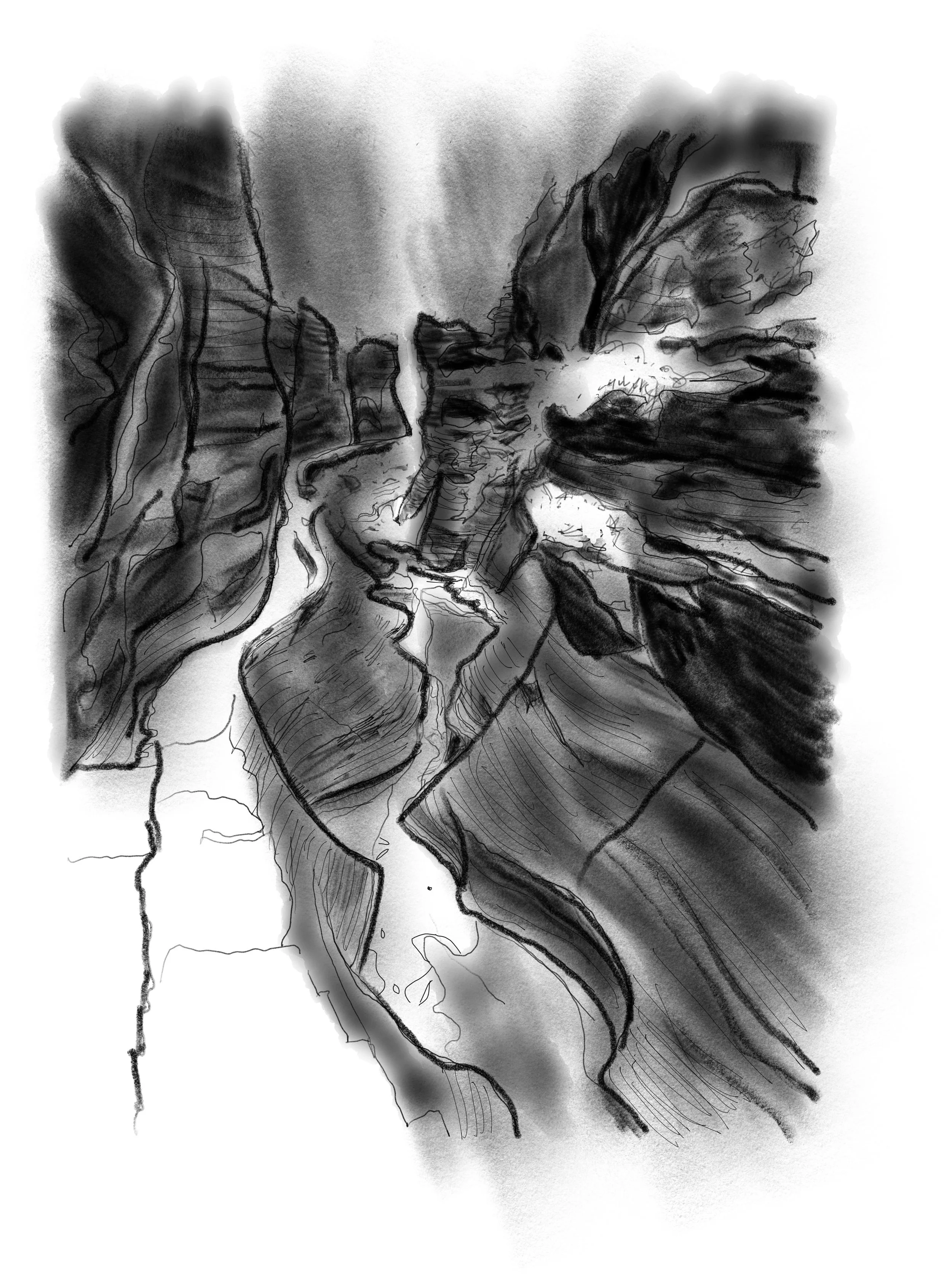
Watkins Glen, Summer 2026
This summer I took a road trip to reset. Driving became meditation: music, windows open, volume up, memories surfacing and disappearing into the wind. I avoided highways. Somewhere in the Catskills, my phone lost its signal and I got lost. I was free, and disoriented. I planned to spend two nights in a tiny house in the Finger Lakes, chasing waterfalls and my childhood self. Waterfalls force my brain's cacophony into submission. They pull me into the present and, through unrelenting audio and visual repetition, push me toward bigger ideas.
New York State has an abundance of waterfalls that I overlooked for most of my life. Watkins Glen, my destination, is a gorge strung with 19 waterfalls, and its path weaves behind, around and in front of them. Beyond Watkins Glen, the region is scattered with hidden ones, thunderous spots where I could sit in the shade on a summer day and read beside the reassuring force of water. Canadian wildfire smoke settled over the Finger Lakes while I was there, and the sky turned sour and pink. I visited other waterfalls for the first two days and waited. On my last morning, the smoke lifted. I arrived at the upper entrance to Watkins Glen at sunrise, before the crowds and the heat, in the final hours before I had to leave.
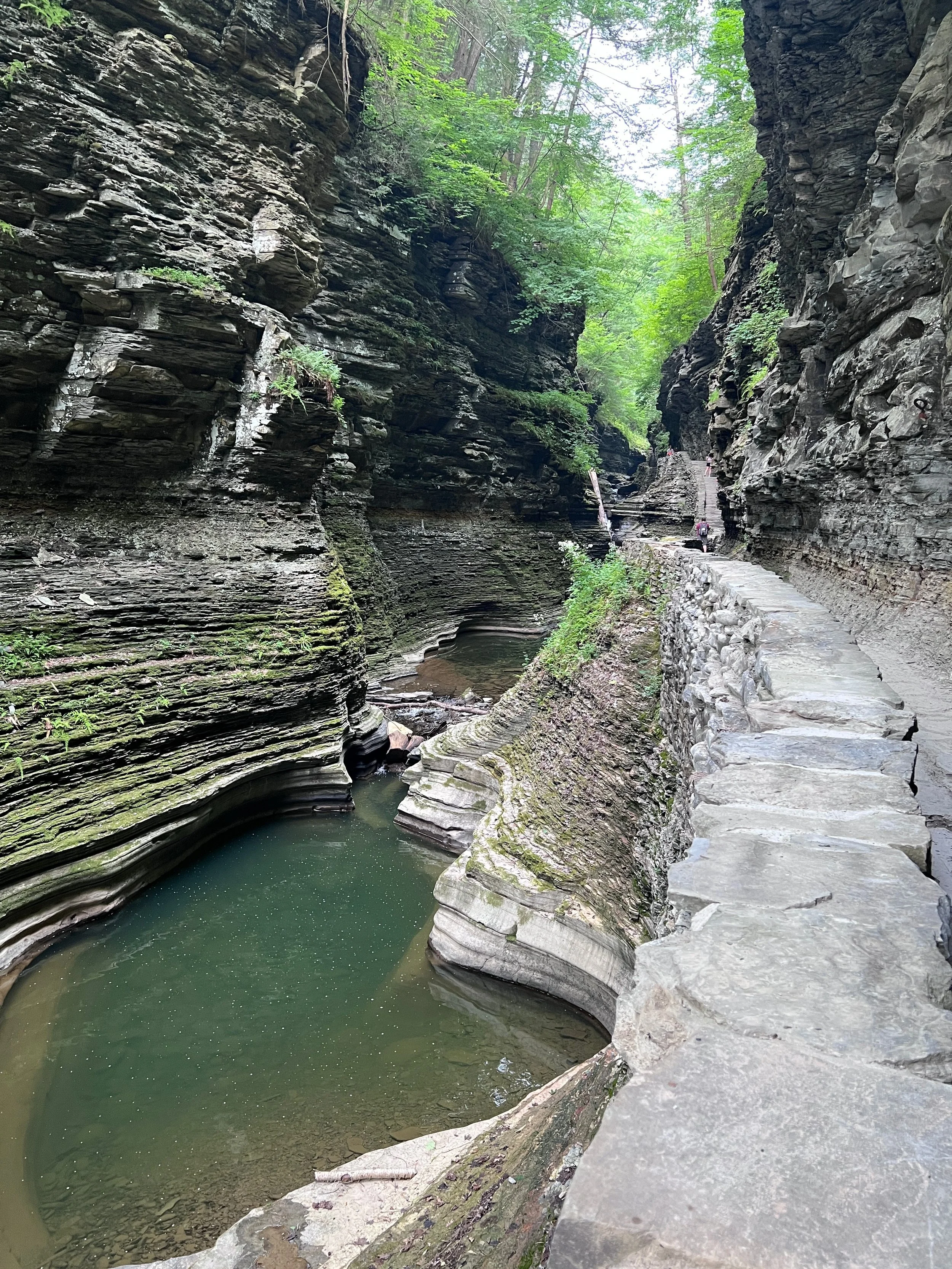
Watkins Glen compresses incompatible scales of change into one place: ancient sediment, catastrophic glaciers and water making incremental cuts every day.
About 390 million years ago, this part of New York lay beneath a shallow sea. Sediment washing from ancient mountains accumulated on its floor and compressed into layers of rock. Much later, glaciers pushed into the old river valleys. They were water in another form, following their own path of least resistance, and they carved and deepened the valleys, leaving smaller tributary valleys stranded above them. When the ice retreated, Glen Creek began cutting its way through that difference in elevation. Softer layers eroded beneath harder ones, producing waterfalls, plunge pools and the deep, fluted walls of the gorge. What looks like one monumental act of creation is really a collaboration among different materials, relentless pressure and an indecent amount of time. Glen Creek empties its waters directly into the southern basin of Seneca Lake. According to New York State Parks, a single drop of water spends about 18 years in Seneca Lake, and it takes about 25 years for a drop of water to travel from Glen Creek into the Atlantic Ocean.
The gorge is not a relic. It is an event still happening. Walking between its tall, undulating walls, I was in the middle of 12,000 years of ongoing change, looking at layers that exposed millions of years of what used to be. Time as architecture; nature as palm-reader. Some transformations are abrupt; others are so slow that they look like permanence. The glaciers changed the land dramatically. The creek has been revising their work ever since.
As I followed the water through the gorge, I thought about the path water had taken through my home in February. During an inhospitable cold snap, a pipe burst and water found its path of least resistance. I wrote about the flood. In a structure, water can destroy plaster, wood, the building envelope, everything; left unattended, it breeds mold. That water was not on a 25-year schedule. At Watkins Glen, the same force creates a magical world.
I used to think that the path of least resistance was aspirational: eliminate the blocks and enable the flow. But a strength in the wrong place becomes a weakness without changing its nature. Water doesn't become a different substance when it destroys a ceiling instead of carving a gorge. Context changes everything.
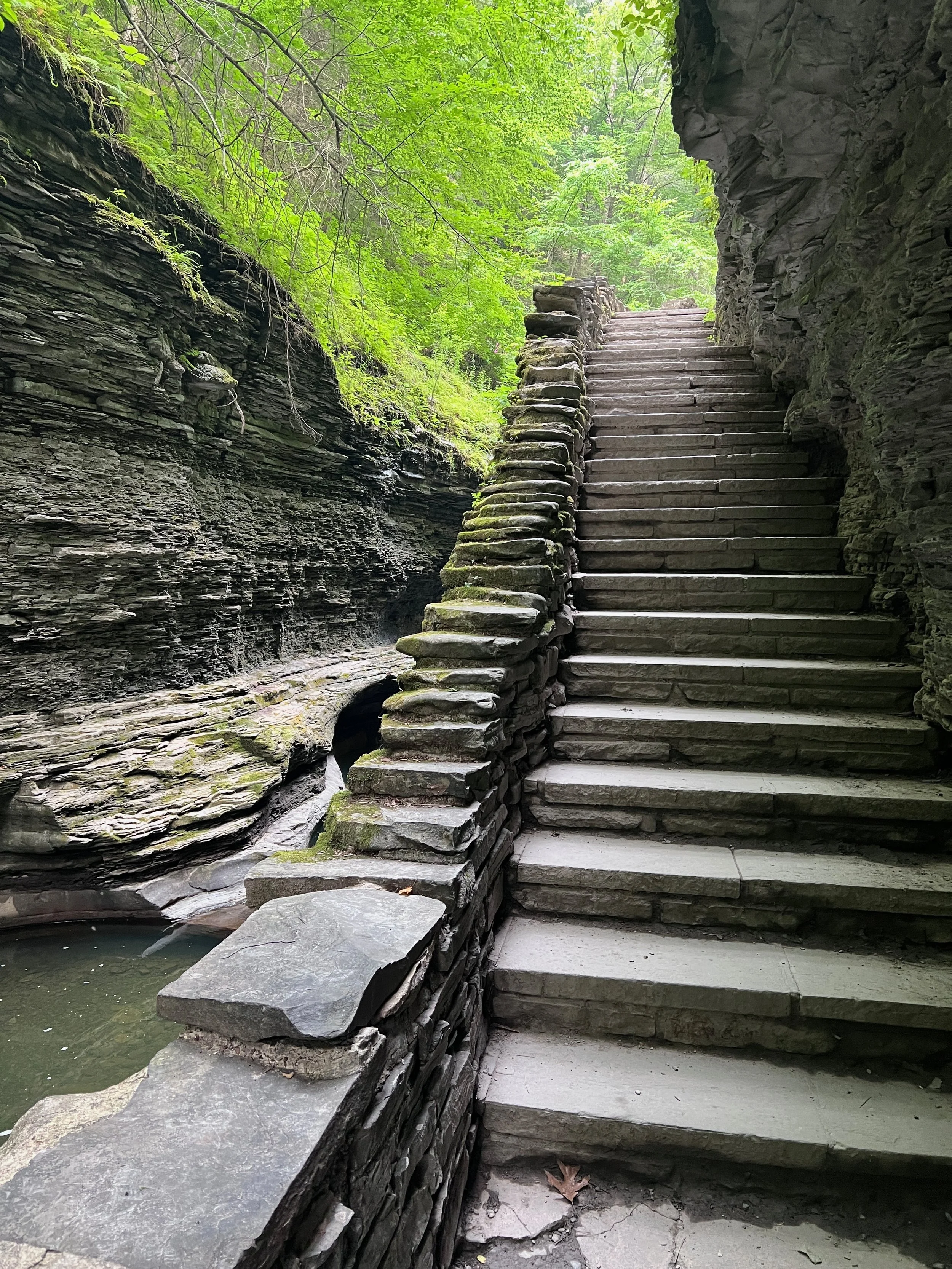
The childhood self I went looking for moved through the world with less resistance. Somewhere along the way, I built barriers. Some are doing real work, like a building envelope that keeps the weather out. Others were built for storms that passed long ago and now only send the flow somewhere it shouldn't go. You can't tell which is which by looking at one wall. You have to observe the whole system. On this trip I chose the back roads, the dead zones and two days of waiting for the smoke to clear. That resistance was the point.
Standing between those ancient walls, I recognized that progress is less about eliminating resistance than understanding where it belongs. The path of least resistance isn't fixed. It is the product of the whole system, and we can change the system. Some transformations happen intentionally, others catastrophically. Some happen through persistent revision, one nearly invisible cut after another. The work is not always to clear the path; sometimes it is to shape it.